
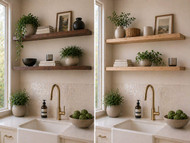
Walnut vs. White Oak Floating Shelves: A Side-by-Side Comparison for 2026
Posted by Josh Lorg on April 27, 2026
Floating shelves remain one of the most in-demand design features for modern homes in 2026. As interior trends shift away from cool gray tones and toward warmer, more natural materials, the choice of wood species has become more important than ever. Two standout options dominate the conversation: walnut floating shelves and white oak floating shelves.
Both are premium hardwoods with distinct advantages, but they create very different visual and functional outcomes. This guide breaks down walnut vs. white oak floating shelves to help you choose the right style for your space.
Why Wood Tone Matters in 2026 Interior Design
In 2026, design trends are clearly favoring warm wood tones over cooler gray finishes. Homeowners are prioritizing comfort, depth, and organic textures. This is where walnut and white oak shine, but in different ways.
Walnut aligns perfectly with the trend toward darker woods. It brings richness and contrast that instantly elevates a room. White oak, while lighter, still offers warmth compared to outdated gray-toned materials. It creates a softer, more natural look that works across many design styles.
If you are looking to stay on trend, both woods fit within the 2026 design movement, but walnut stands out as the more bold and contemporary choice.
Color Comparison: Walnut vs. White Oak Floating Shelves
Walnut floating shelves are known for their deep brown tones. These can range from medium chocolate to darker espresso shades, often with subtle undertones that add dimension. This darker coloring creates contrast, especially against light walls or cabinetry, making walnut shelves a focal point.
White oak floating shelves feature a lighter, more neutral palette. Natural tones range from beige to warm honey. While lighter in appearance, white oak still carries a warm undertone that keeps it from feeling sterile or cold.
For homeowners searching for “dark wood floating shelves” or “warm modern shelving,” walnut is the stronger match. For those looking for “light wood floating shelves” or “natural wood shelving,” white oak offers a clean and versatile solution.
Grain and Texture: Modern vs. Organic Appeal
Grain pattern plays a major role in how floating shelves look once installed.
Walnut typically has a smoother, more consistent grain. This creates a refined and polished appearance that works well in modern, contemporary, and upscale interiors. It feels intentional and clean without too much visual noise.
White oak has a more visible and textured grain pattern. The lines are often straighter with natural variation, giving it a more organic and tactile feel. This makes white oak a great choice for rustic, Scandinavian, or transitional designs.
If your goal is sleek and modern floating shelves, walnut is ideal. If you prefer textured, natural wood shelving, white oak delivers that look.
Durability and Strength for Everyday Use
When comparing durability, both walnut and white oak floating shelves perform well, but there are slight differences.
White oak is a harder wood, making it more resistant to dents and daily wear. It also has a closed grain structure, which provides better resistance to moisture. This makes white oak a top choice for kitchens, bathrooms, and high traffic areas.
Walnut is slightly softer but still highly durable for shelving. Over time, it may develop small dents or marks, but many homeowners appreciate this as part of its natural aging process. Walnut shelves tend to develop character, enhancing their visual appeal over time.
For practical, high-use areas, white oak has a slight edge. For design-focused spaces, walnut remains a strong and reliable option.
Design Impact: Statement vs. Subtle Shelving
Walnut floating shelves are designed to stand out. Their darker tone creates visual contrast and draws attention, making them a centerpiece in any room. They pair well with warm neutrals, matte finishes, and metallic accents like brass or gold.
White oak floating shelves are more understated. They blend into a space and support the overall design rather than dominate it. This makes them ideal for minimalist interiors or rooms where you want a cohesive, airy feel.
If you want statement floating shelves, walnut is the better choice. If you want subtle, versatile shelving, white oak is the way to go.
Best Rooms for Walnut vs. White Oak Floating Shelves
In kitchens, walnut shelves create bold contrast against light cabinets and add warmth to modern designs. White oak shelves keep kitchens feeling bright and open while still introducing natural texture.
In living rooms, walnut adds depth and pairs well with darker furniture and layered lighting. White oak complements lighter palettes and casual, relaxed environments.
In bathrooms, white oak floating shelves are often preferred due to their moisture resistance. Walnut can still be used but may require additional sealing for long-term durability.
Walnut vs. White Oak Floating Shelves: Which Is Better for 2026?
The answer depends on your design goals.
Walnut floating shelves are ideal for homeowners embracing 2026 interior design trends that favor darker woods and warm, rich tones. They create contrast, elevate the space, and feel high-end.
White oak floating shelves remain a timeless option. They are durable, versatile, and perfect for lighter, more natural interiors that still align with the shift away from gray tones.
If you want bold, modern floating shelves that reflect current trends, walnut is the clear standout. If you want adaptable, light wood shelving that works in almost any space, white oak continues to be a reliable choice.
Looking to add floating shelves to your home? Contact us today to get started!