
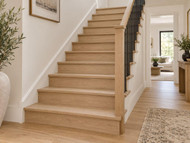
What Are Retrofit Stair Treads? A Complete Guide for Homeowners
Posted by Josh Lorg on October 1, 2026
Updating a staircase can completely change the look of a home, but a full stair rebuild is not always necessary. Retrofit stair treads provide a practical option for homeowners who want to transform an existing staircase without removing the entire stair structure.
Designed to fit over existing stair steps, retrofit stair treads can give an outdated staircase a clean, finished appearance while simplifying the remodeling process. They are especially useful when replacing carpeted stairs, worn wood steps, or outdated finishes.
Whether you are planning a DIY project or working with a contractor, understanding how retrofit stair treads work can help you determine whether they are the right solution for your staircase.
What Are Retrofit Stair Treads?
Retrofit stair treads are replacement treads designed to be installed over existing stair steps. Instead of completely removing the existing stair structure, the new tread is fitted over the old step to create a refreshed walking surface.
This approach is sometimes called a stair overlay or stair tread replacement. The existing staircase remains in place while the visible portion of each step is upgraded.
Retrofit treads are commonly used during:
- Staircase remodels
- Carpet-to-hardwood conversions
- Home renovations
- Flooring updates
- Restoration projects
- Interior design upgrades
The result is a staircase that can look substantially different without requiring the same level of demolition associated with rebuilding the stairs.
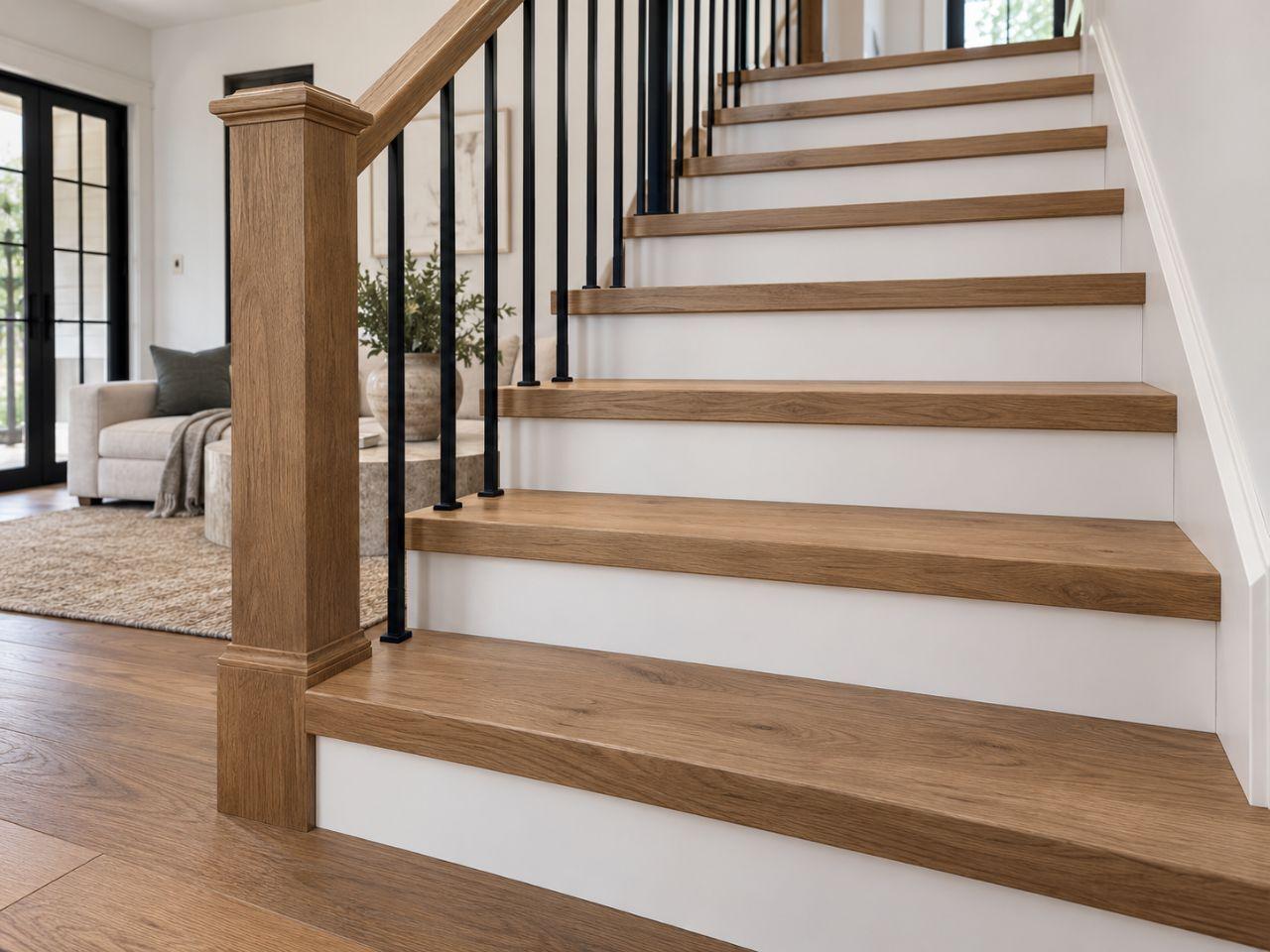
How Do Retrofit Stair Treads Work?
The installation process starts with evaluating the existing staircase. Each step needs to be measured carefully to determine the appropriate tread dimensions.
1. Inspect the Existing Stairs
Before ordering replacement treads, inspect the existing steps for structural problems. The underlying stairs should be solid, stable, and capable of supporting the finished staircase.
Loose, damaged, or significantly uneven steps may need to be repaired before retrofit treads are installed.
2. Measure Each Step
Accurate measurements are one of the most important parts of a stair renovation.
Measure:
- Stair width
- Existing tread depth
- Existing riser height
- Available overhang
- Thickness of the new tread
- Any variations between individual steps
Older staircases are not always perfectly uniform, so it is important to verify measurements rather than assuming every step is identical.
3. Prepare the Surface
The existing stair surface may need to be cleaned, leveled, or modified before installation. Carpet, padding, staples, adhesives, or other flooring materials typically need to be removed when necessary.
The goal is to create a stable surface that allows the new tread to sit properly.
4. Install the New Treads
Once the existing steps have been prepared and the treads have been properly sized, the retrofit stair treads can be installed according to the project's construction requirements.
A professional contractor can help determine the appropriate installation method based on the existing staircase, materials, and local building requirements.
Why Choose Retrofit Stair Treads?
One of the biggest advantages of retrofit stair treads is that they can simplify a staircase renovation.
Less Demolition
Because the existing stair structure can remain in place, a retrofit approach may reduce the amount of demolition required compared with completely rebuilding a staircase.
Updated Appearance
New wood stair treads can give an older staircase a dramatically different appearance. Options such as oak, walnut, maple, alder, and other wood species can complement a wide range of interior styles.
Flexible Design
Replacement stair treads can be incorporated into traditional, contemporary, rustic, and modern interiors. Choosing the right wood species and finish allows the staircase to coordinate with surrounding floors, trim, doors, and furniture.
Ideal for Remodeling
Retrofit stair treads are particularly useful when the rest of a home is being updated but the staircase itself remains structurally sound.
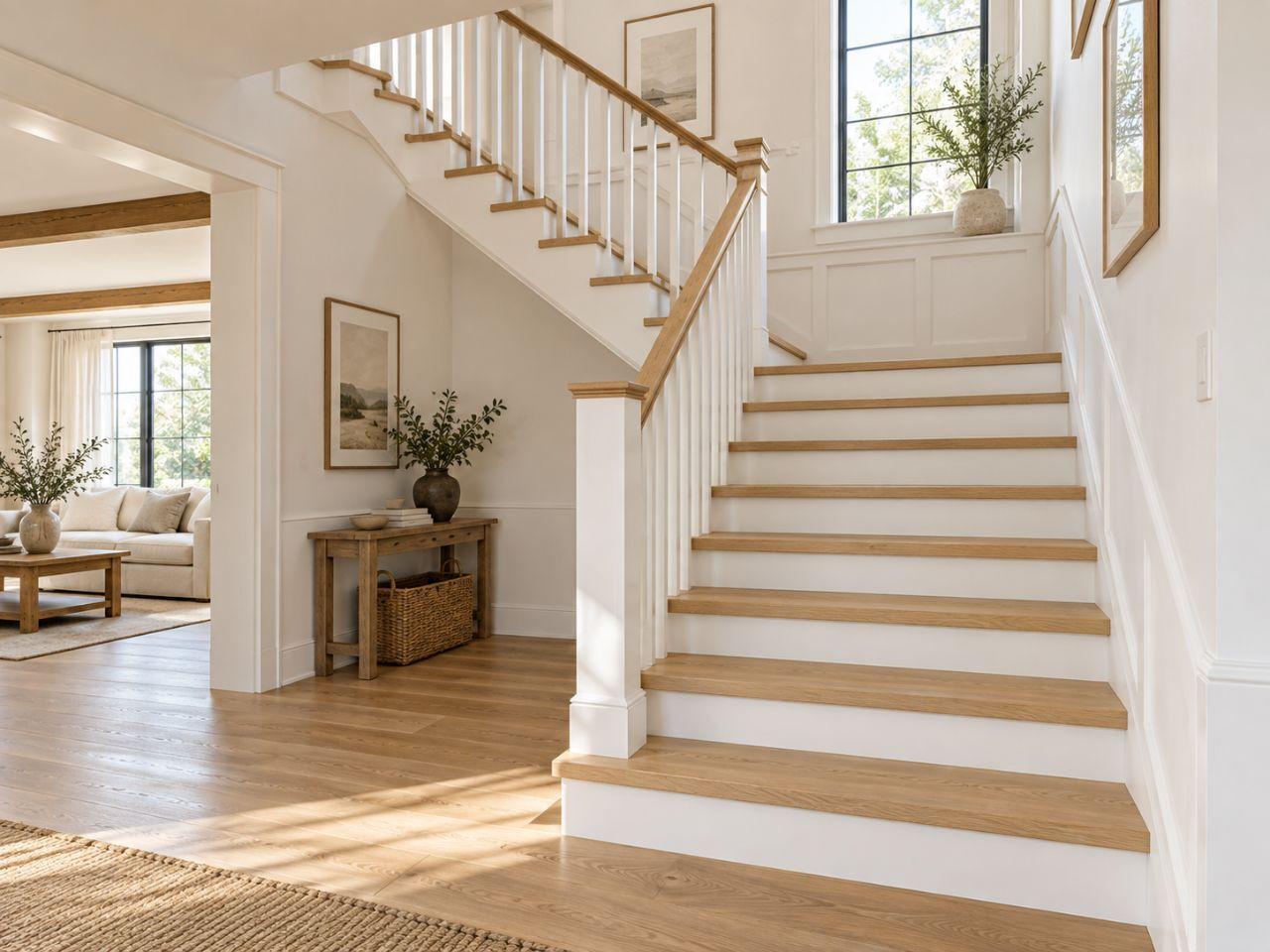
What Should You Consider Before Buying Retrofit Stair Treads?
Not every staircase is automatically suited for a retrofit application. Consider these factors before purchasing replacement treads.
Stair Dimensions
The new tread needs to work with the existing stair dimensions. Pay particular attention to tread depth, width, thickness, and the finished riser height.
Wood Species
Wood species affects both appearance and performance. Oak offers a classic appearance, while walnut provides a deeper, richer look. Maple, alder, and other species can offer different grain patterns and color characteristics.
Finish
Think about how the stair treads will coordinate with your flooring and surrounding finishes. Depending on the project, you may choose a natural appearance, a stained finish, or an unfinished tread that can be customized later.
Building Codes
Stair dimensions can be subject to local building codes. Adding material to an existing tread can affect the relationship between tread depth and riser height, so homeowners should verify applicable requirements before beginning a renovation.
For major stair modifications, consulting an experienced contractor is a smart step.
Retrofit Stair Treads vs. New Stair Treads
The primary difference comes down to the existing staircase.
Retrofit stair treads are intended to work with an existing stair structure. They are often considered when the underlying stairs are structurally sound but the visible steps need to be replaced or upgraded.
New stair treads may be used when constructing a new staircase or when the existing stair structure requires more extensive reconstruction.
For a homeowner completing a cosmetic or flooring-focused staircase renovation, retrofit treads may provide a more practical approach.
Are Retrofit Stair Treads Right for Your Project?
Retrofit stair treads can be a strong option when the goal is to update the appearance of existing stairs while retaining the underlying structure.
They are worth considering if:
- Your existing staircase is structurally sound
- You want to replace carpet with wood
- The current treads are worn or outdated
- You want a more finished, custom appearance
- You are renovating other areas of the home
- You want to avoid unnecessary structural demolition
However, stairs that have significant structural damage, unusual dimensions, or other construction issues may require a different approach.
A Practical Solution
Retrofit stair treads offer homeowners a practical way to refresh an existing staircase without necessarily rebuilding it from the ground up. By installing new replacement treads over properly prepared existing steps, you can create a more attractive and cohesive staircase as part of a larger home renovation.
The key is careful planning. Measure every step, evaluate the existing structure, consider tread thickness and finished dimensions, choose a wood species and finish that fit your design, and make sure the finished staircase meets applicable building requirements.
If your existing stairs are structurally sound but need a visual upgrade, explore retrofit stair treads and find the combination of dimensions, wood species, and finish that works for your remodeling project.
Looking to add custom floating stair treads to your new build? Contact us today to get started!