
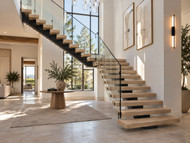
Why Architects Recommend Custom Stair Parts for Luxury Home Builds
Posted by Josh Lorg on September 23, 2026
In a luxury home, the staircase is rarely just circulation. It sets the first impression, carries the material story of the house, and tells guests whether the details were designed or assembled. That is why architects consistently specify custom stair parts instead of catalog kits.
Stock treads come in limited widths, thin profiles, and generic edges. They force the architecture to compromise. Custom hardwood treads, risers, returns, and trim let the stair match floor species, wall proportions, and the intended sightline.
Custom Stair Parts Give Architects Control Over Proportion
Luxury plans seldom use standard rise-and-run packages. Double-height foyers, open landings, and cantilevered stairs need exact dimensions.
Architects choose custom stair parts so they can:
- Set tread thickness for visual weight
- Match widths to stringers or wall pockets
- Specify bullnose or square-edge profiles that line up with flooring
- Coordinate grain and finish across every visible surface
A floating or open-riser stair only looks effortless when every tread is consistent. A few millimeters of variation reads as unfinished in a high-end entry.

Which Custom Stair Parts Architects Specify and Why
The table below breaks down the parts architects most often call out on luxury drawings and when each one earns its place.
|
Stair part |
Best use in a luxury build |
What architects gain |
|
Floating hardwood treads (1 5/8") |
Modern open-riser and cantilevered stairs |
Clean hovering lines, consistent thickness, strong presence underfoot |
|
Thick butcher-block floating treads (3.5" to 4") |
Statement foyers and sculptural stairs |
Extra visual mass without exposing more structure |
|
Bullnose standard treads |
Traditional and transitional closed stairs |
Classic rounded edge that meets flooring and risers cleanly |
|
Square-edge or bullnose retrofit treads |
Remodels that keep existing stringers |
High-end look without a full tear-out |
|
Matching stair risers |
Closed or partially closed stairs |
Even color, grain, and height from tread to tread |
|
Stair returns |
Open sides, landings, and partial-open runs |
Finished ends instead of raw cut edges |
|
Coordinating trim boards |
Transitions to floors, walls, shelves, and mantels |
One hardwood language throughout the home |
White oak is the species architects specify most often because of its tight grain and finish flexibility. Red oak, maple, and walnut appear when the design needs warmer tone or stronger contrast. Painted maple trim is used when the stair should recede and let stone, plaster, or metal take the lead.
Fit and Finish Matter More Than a Pretty Photo
A luxury stair is touched every day. Edges must feel solid. Color must stay even under changing light. Custom parts cut to project dimensions reduce field scribing, gaps, and last-minute compromises.
When treads, risers, returns, and trim come from the same hardwood and finishing process, the stair stops looking like separate pieces and starts reading as architecture.
Practical Reasons Architects Avoid Off-the-Shelf Parts
Custom parts also protect the construction schedule:
- Exact lengths cut waste and callbacks
- Consistent thickness helps railing and glass installers hit their marks
- Solid hardwood handles concentrated load better than thin overlays
- Coordinated finishes prevent a “close enough” mismatch with flooring
For open-riser and floating stairs, thickness is structural as well as visual. A 1 5/8-inch solid tread feels different underfoot than a thinner cover. Architects specify the heavier profile when the stair is a primary path, not a back stair.
Custom Stair Parts Protect Long-Term Value
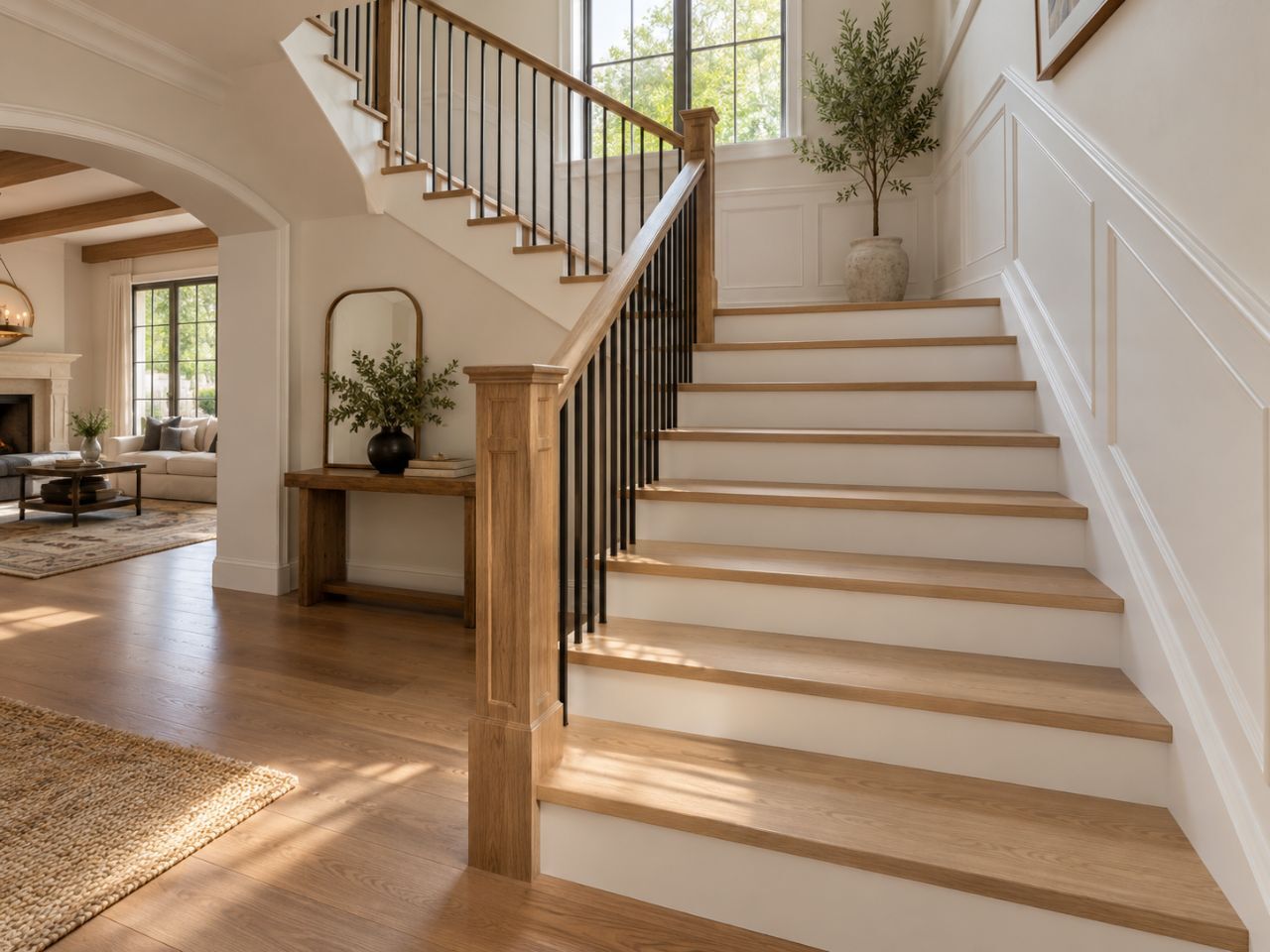
Luxury buyers notice craftsmanship. A poorly fitted stair with mismatched grain undercuts the rest of the interior. A well-detailed stair with matching hardwood treads and trim supports the story of quality that appraisers and future buyers look for.
Custom sizing also keeps options open. If stain or flooring species shifts during construction, treads and risers can still be finished to match.
How to Specify Custom Stair Parts on Your Build
Start with the architecture, not a product list. Decide whether the stair is closed, open-riser, or floating. Confirm species and finish against flooring and millwork. Then order treads, risers, returns, and trim as one coordinated set in the exact sizes the drawings require.
White oak bullnose treads suit traditional homes. Square-edge retrofit treads update existing stairs cleanly. Solid floating treads in white oak, walnut, maple, or red oak deliver the modern look architects sketch for double-height entries.
A Structural and Visual Centerpiece
Architects recommend custom stair parts because a luxury staircase is never just a way to change floors. It is a structural and visual centerpiece that must fit the house. Precise hardwood treads, risers, returns, and trim give the design the control, consistency, and durability the project deserves.
Specify custom stair parts early, while framing is still flexible, so the finished stair looks intentional from every angle.
Looking to add custom floating stair treads to your home? Get started today!