
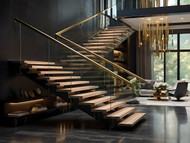
How Floating Stair Treads Create the Ultimate Open-Concept Illusion
Posted by Josh Lorg on Jan 30th 2026
In modern interior design, few architectural features make as bold a statement as a floating staircase. Sleek, airy, and visually arresting, floating stair treads offer more than just a way to move between levels, they transform how space feels. By redefining the boundaries between form and function, floating stair treads help create the ultimate open-concept illusion in contemporary homes.
At their core, floating stair treads like our Unfinished White Oak Floating Stair Tread and other hardwood options are individual steps designed to appear as if they hover in mid-air without traditional vertical supports or bulky stringers. This absence of visual clutter allows light and sightlines to flow uninterrupted, making spaces feel larger, brighter, and more connected than ever before.
The Magic Behind the “Floating” Effect
Floating stair treads achieve their signature look through clever engineering and clean design. Rather than relying on visible supports beneath or beside each step, these treads mount onto concealed hardware, often steel brackets or hidden supports anchored into a reinforced wall. The result is a staircase that seems to dissolve into the architecture itself, with each step suspended in space.
What makes this design particularly powerful in open-concept homes is the way it preserves sightlines. Traditional staircases can block views or create visual barriers in a room; floating treads eliminate those obstructions. Whether you’re inside a loft, a split-level, or a wide-open living area, a staircase made of individual floating steps leaves the eye free to travel through the space, amplifying the sense of openness.
Why Floating Stair Treads Are Worth It
- Enhancing Architectural Flow
Floating stair treads immediately upgrade a space’s architectural language. The minimalist approach strips away excess, so each step becomes a sculptural element that contributes to the room’s rhythm without dominating it. This makes them perfect for spaces where openness is a priority. - Maximizing Light and Space
Without risers blocking light, floating stair treads allow natural illumination to pass through and around each step. This contributes to a brighter interior and can reduce the need for artificial lighting during the day. In smaller homes, that extra light can make rooms feel more expansive. - A Modern, Minimalist Aesthetic
Floating stair treads signal sophistication. With options available in a range of hardwoods — from classic oak to rich walnut, you can tailor the look to fit virtually any aesthetic. The natural grain and warmth of wood bring organic texture to contemporary designs, while the absence of bulky structural elements keeps designs clean and modern. - Seamless Integration with Open Interiors
Because floating treads don’t interrupt visual continuity, they pair beautifully with open interiors. In an open-plan living area or between public and private zones, these staircases maintain a sense of cohesion. They feel like part of the home’s fabric rather than a break in it.
Design Tips for Floating Stair Treads
To maximize both style and function when incorporating floating stair treads, consider the following design tips:
Balance Contrast and Cohesion
Choose treads that complement your interior palette. Light woods like maple and oak keep the space feeling airy and bright, while darker species, like walnut, add drama and depth without overwhelming the room. Natural wood variations add character and warmth, making each staircase unique.
Pay Attention to Thickness and Proportion
Floating stair treads are typically thicker than regular steps to ensure strength and stability. The substantial feel of a 1 ⅝″ thick tread provides visual weight without bulk — a perfect balance of form and function. Proportion is key: oversized steps can feel chunky, while too-thin options may not deliver the intended visual impact.
Use Lighting to Elevate the Effect
Integrating lighting beneath each tread or recessed lights along the wall enhances the floating illusion. Carefully placed lighting can create striking shadows and highlight the tactile qualities of the wood, turning the staircase into a design centerpiece.
Coordinate with Complementary Materials
Floating stair treads pair beautifully with materials like glass, steel, and concrete. Glass railings maintain clear sightlines, while powder-coated steel brackets add a sleek industrial edge. Concrete or stone flooring can ground the space, offering a contrast to the organic feel of wood.
Think Beyond the Staircase
Extend the design ethos of floating stair treads into other elements of your home. Open shelving, low-profile cabinetry, and minimal furniture all support a cohesive open-concept aesthetic. The staircase shouldn’t feel like an island but part of a unified design language.
An Evolution in Modern Design
Floating stair treads represent an evolution in modern architectural design, where function meets art, and spatial boundaries dissolve. Whether you choose the warm tone of oak, the richness of walnut, or a custom wood species, these treads turn everyday movement into a visual experience. They not only elevate your home’s style but also enhance the way space is perceived and experienced.
By embracing minimalist design principles and thoughtful detailing, floating stair treads help create interiors that feel open, light, and endlessly inviting. For anyone looking to blur the lines between floors and make a striking design statement, there’s no finer solution than floating stair treads.
Looking to add floating stair treads to your home? Contact us today to get started!